MarketplaceProduct & Engineering
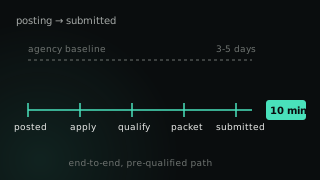
Speed matters: from job posting to submitted candidate in 10 minutes
Three different clocks run in the submission pipeline. They tell three different stories about speed.



Blog
Product thinking, engineering deep-dives, company announcements, and perspectives from the team building Trusted.
Three different clocks run in the submission pipeline. They tell three different stories about speed.
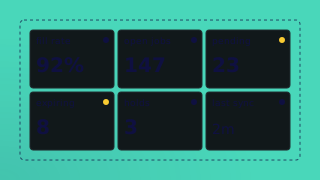
How we put a multi-turn AI agent into production without letting it touch the database. Ninety-two percent of incoming jobs now go live without a human in the loop.
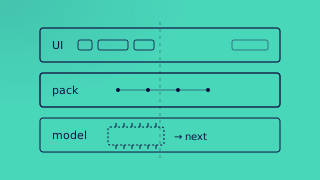
What we learned rebuilding intake-to-submission from scratch in thirty days, with most of the code written by AI.
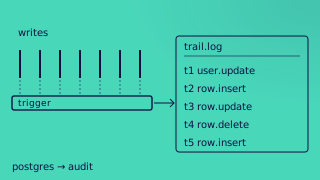
We open-sourced IronTrail, a Postgres-trigger-based change data capture gem. Here's the architectural shift, the metadata pattern that makes it work, and what we learned running it in production for over a year.
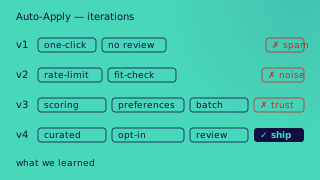
What it means to apply on a clinician's behalf, and the four versions plus a manual pilot it took to make that safe. Every guardrail in the current feature exists because something specific broke in production.
A program-shaped surface for the people who run hospital contingent workforce programs, plus the integration-status plumbing that keeps it honest.
What looks like 'call an API' ends up being a multi-quarter engineering investment when UKG is the system of record for who works where.
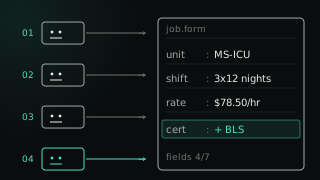
Forms were the answer when software couldn't understand sentences. Now that it can, we rebuilt clinician validations as conversation and let the model fill the form.
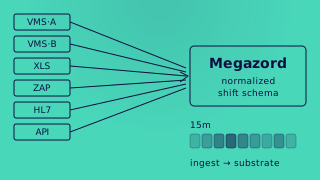
How we rebuilt shift ingestion as a time-blocked demand substrate, and why every higher-order feature in Works depends on it.
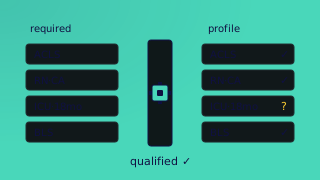
Qualification used to take 20 to 30 hours of advocate time per application. Here's the rules engine that does it as structured code, and the AI layer that handles what rules alone can't.
Nursys has been wired in since 2018, but it ran as an upfront check that still leaned on humans to read the results. In 2025 we rebuilt it as a real-time qualification rule.
Why clinical scheduling resists clean optimization, how we wrap a constraint solver in a pipeline a nurse manager can actually trust, and what it takes to ship the first live hard constraint.