




Blog
Inside Trusted
Product thinking, engineering deep-dives, company announcements, and perspectives from the team building Trusted.
Featured stories
Marketplace Product & Engineering
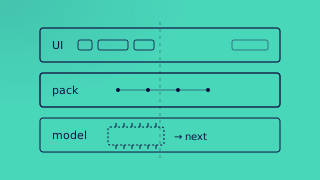
Scrubs: built for the frontier
What we learned rebuilding intake-to-submission from scratch in thirty days, with most of the code written by AI.
Marketplace Product & Engineering
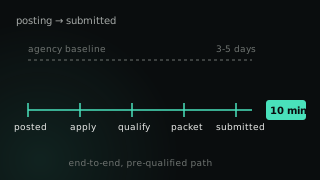
Speed matters: from job posting to submitted candidate in 10 minutes
Three different clocks run in the submission pipeline. They tell three different stories about speed.
All stories
Company Announcements
Trusted Health Collaborates to Bring CareCast Workforce Demand Forecasting to Health Systems
Trusted Health and Mayo Clinic are bringing CareCast workforce demand forecasting to hospitals and health systems through Trusted Works, laying the foundation for proactive staffing and clinician-centered scheduling.
Company Announcements
Trusted Health Acquires ShiftOS to Advance Agentic Staffing and Scheduling for Health Systems
Trusted Health has acquired the technology, intellectual property, and other assets of ShiftOS, developer of Holly, an AI scheduling agent. Holly will be integrated into Trusted Works.
Company Announcements
Trusted Health Named the 13th-Largest Travel Nurse Staffing Firm in the US
Staffing Industry Analysts named Trusted Health the 13th-largest travel nurse staffing firm in the United States on its 2026 list.
Works Perspectives
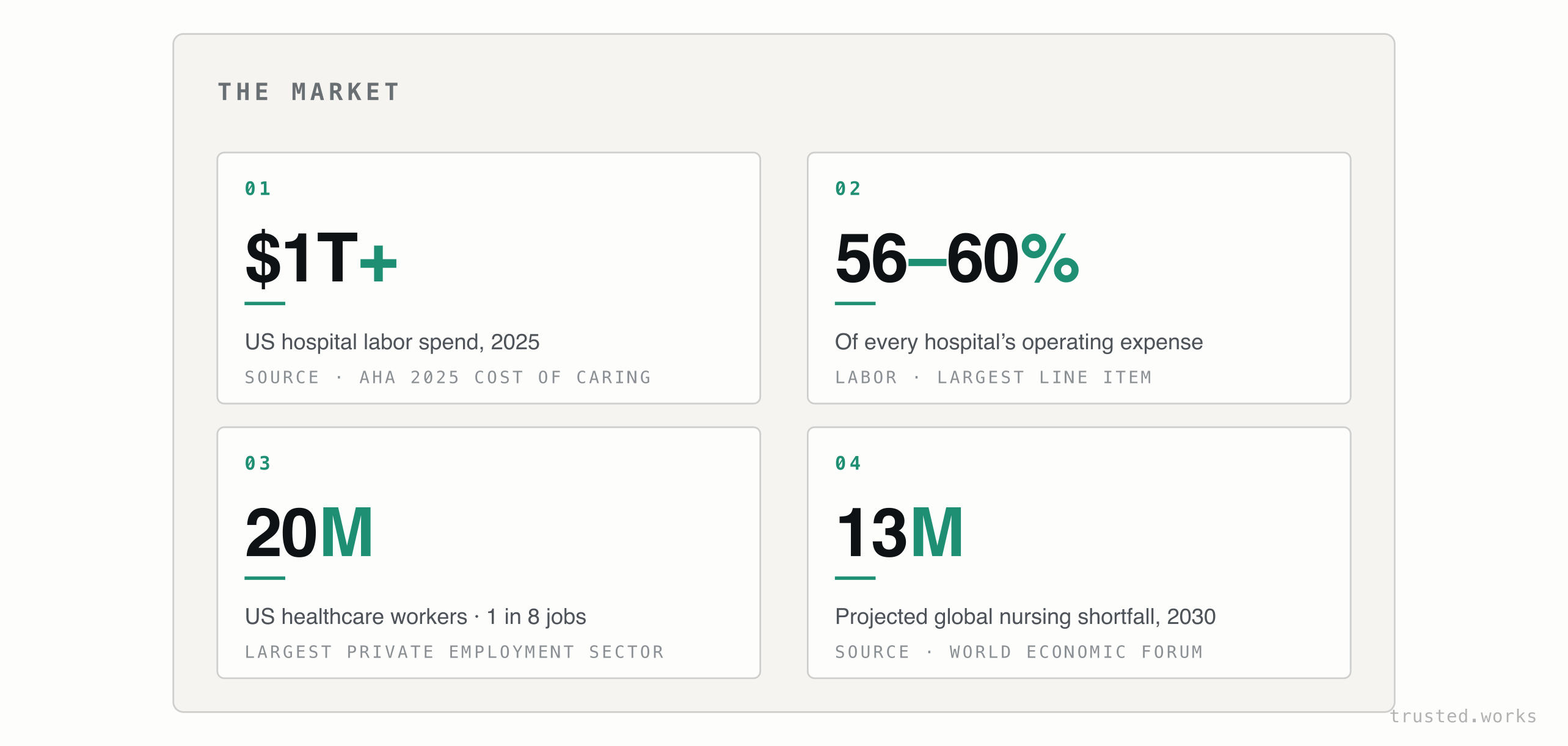
Every Open Shift
The operating system for the healthcare workforce, and the head start AI is accelerating.
Marketplace Perspectives
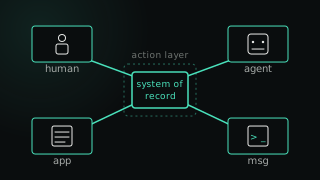
The Agent-Ready Manifesto
Over the next three years, the winners will not just have better models. They will have better operating systems.
Marketplace Product & Engineering
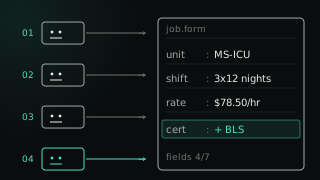
Auto-curation: agents that fill out forms
How we put a multi-turn AI agent into production without letting it touch the database. Ninety-two percent of incoming jobs now go live without a human in the loop.
Open Source Product & Engineering
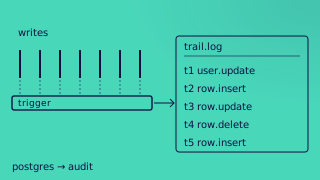
IronTrail: catching every write
We open-sourced IronTrail, a Postgres-trigger-based change data capture gem. Here's the architectural shift, the metadata pattern that makes it work, and what we learned running it in production for over a year.
Marketplace Product & Engineering
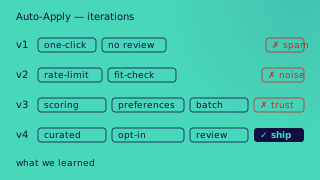
Auto-Apply: What worked, and what didn't
What it means to apply on a clinician's behalf, and the four versions plus a manual pilot it took to make that safe. Every guardrail in the current feature exists because something specific broke in production.
Works Product & Engineering
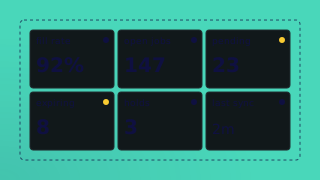
Mission Control: the command center for VMS program managers
A program-shaped surface for the people who run hospital contingent workforce programs, plus the integration-status plumbing that keeps it honest.